
Outdoor LED advertising works very well when those details are right. This guide covers what actually decides that, from placement and brightness through to content and permits.
You get about six seconds
A driver passing your screen at 80 km/h is not reading a paragraph. Realistically you have a few seconds of glanced attention, and part of that is spent working out what the ad is even for.
So the discipline is subtraction. One idea per message. A brand, an offer, and a way to respond. Anything beyond that gets skipped, and the screen ends up performing like an expensive decoration.
This is the single most common mistake we see on roadside screens, and it costs nothing to fix.
Which way the screen faces matters more than how big it is
Two identical screens on the same road can perform very differently depending on orientation.
A screen facing west takes direct sun through the late afternoon, which is exactly when the evening commute builds. Even a high-brightness panel is fighting glare in that window. Facing away from the low sun, or angling slightly off it, keeps your content readable during the hours that matter most.
Approach angle is the other half of it. Drivers should see the screen while coming towards it, not catch it in a wing mirror after passing. Before anything is quoted, walk or drive the approach yourself and check what blocks the sightline: trees, a flyover, an existing sign, a lighting column.
A proper site assessment covers this, along with mounting and power. It is worth doing before the screen size is fixed, because a smaller screen in the right position beats a larger one in a compromised spot. Our team assesses viewing distance, ambient light and structure as part of every outdoor LED installation.
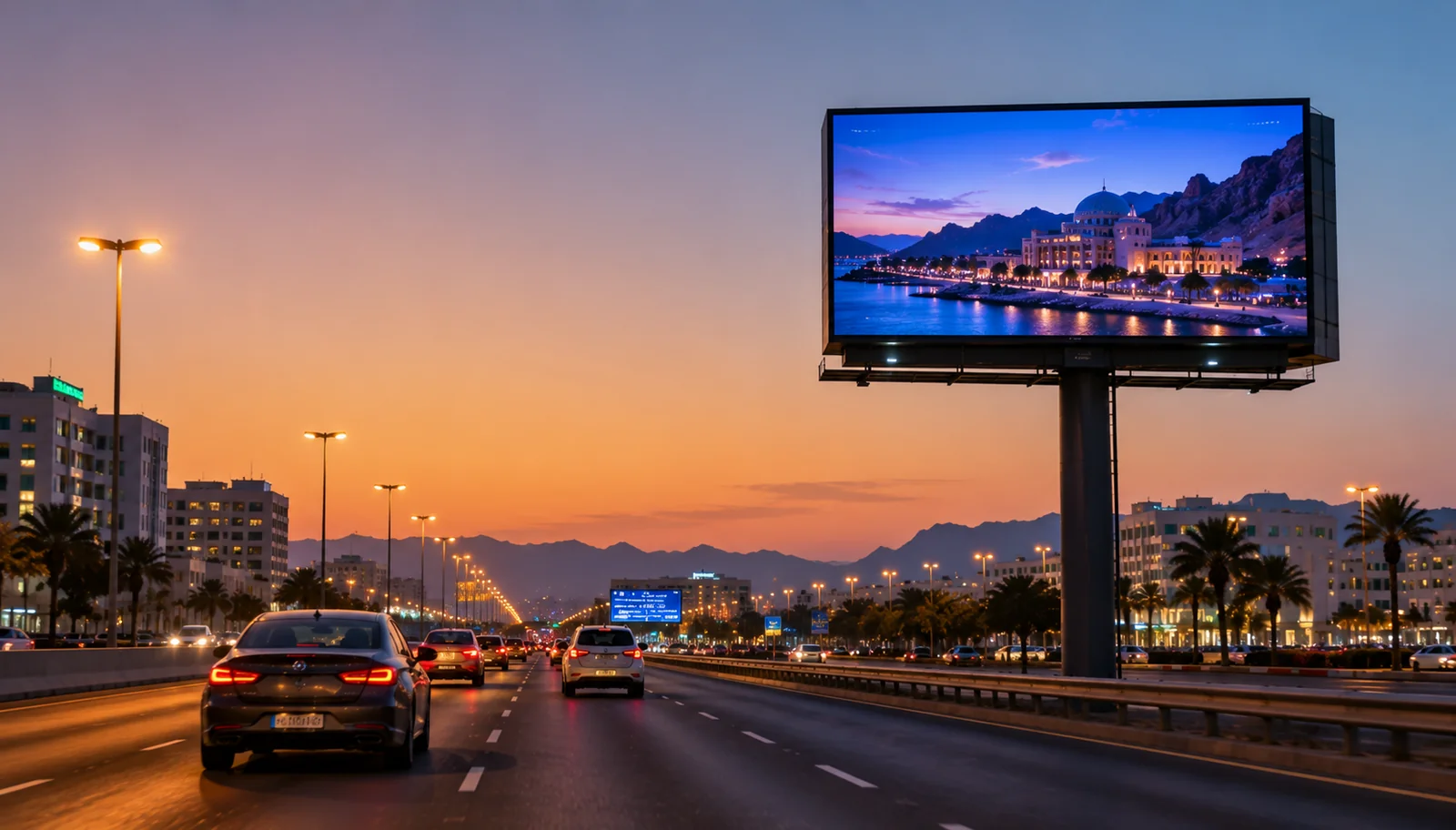
Brightness: the setting most screens get wrong
Outdoor panels in Oman need serious output to stay visible in direct sun. Screens rated between 5,000 and 10,000 nits handle daylight here, along with IP65 or better protection against dust and rain.
But that same brightness after dark is a problem. A screen running at full daytime output at midnight is glaring, uncomfortable for drivers, and a common source of complaints from nearby residents.
The fix is an ambient light sensor that dims the panel automatically as the light drops. It keeps the screen comfortable at night, cuts power consumption, and takes some heat stress off the panels. Ask whether auto-dimming is included and how it is configured, because it is occasionally left switched off after installation.
Writing for people who are moving
Content design decides more of your result than panel specification does. A few rules that hold up on real roads:
• Keep the headline to roughly six or seven words.
• Use heavy, wide typefaces. Thin elegant fonts disappear at distance.
• Push contrast hard. Light text on a dark field usually reads best at night.
• Give a response route people can retain: a short number, a brand name, a landmark. Long URLs are lost immediately.
• Use motion to draw the eye, then hold the message still long enough to be read.
On QR codes, an honest opinion: they belong on shop fronts and menu boards, not on a screen people pass at speed. Nobody is scanning a code while driving. If your screen faces a pavement or a queue of slow traffic, that changes, but for a highway site the space is better spent on the message.
Permits, structure and the parts that cause delays
The screen is the quick bit. What extends timelines is everything holding it up and feeding it.
Outdoor advertising displays generally need municipality approval, and requirements differ by location and site type, so check early rather than after ordering hardware. Alongside that sits the structural work: a mount or steel structure rated for wind loading, a power supply at the right point, and cabling routed to the screen.
Two practical points that save money. Plan maintenance access at the design stage, because reaching a panel later without it usually means hiring lift equipment. And confirm the power route before any groundwork is finished, since retrofitting a supply is far more expensive than laying it during construction.
Change the message through the day
This is where LED earns its advantage over print, and it is underused.
A restaurant can run a lunch offer through the late morning and switch to something else by evening. A retailer can push a weekend promotion on Thursday afternoon and change it Saturday night. Content management software lets you schedule all of that in advance, so nobody needs to touch the system daily.
Set the schedule up during handover while the installer is still with you. Screens that get a schedule in the first week tend to keep using it. Screens left running one static image usually keep running that same image a year later.
Knowing whether it is working
Outdoor advertising cannot be measured like a paid social campaign, and any supplier who claims otherwise is overselling.
What you can do is give the screen its own response route. A dedicated phone number, a promo code that appears nowhere else, or an offer only advertised on that screen. Ask new customers how they heard about you and keep a tally. Compare walk-in traffic against the weeks before the screen went live.
It is rough, but it is real, and it tells you whether to renew the site or move it.