
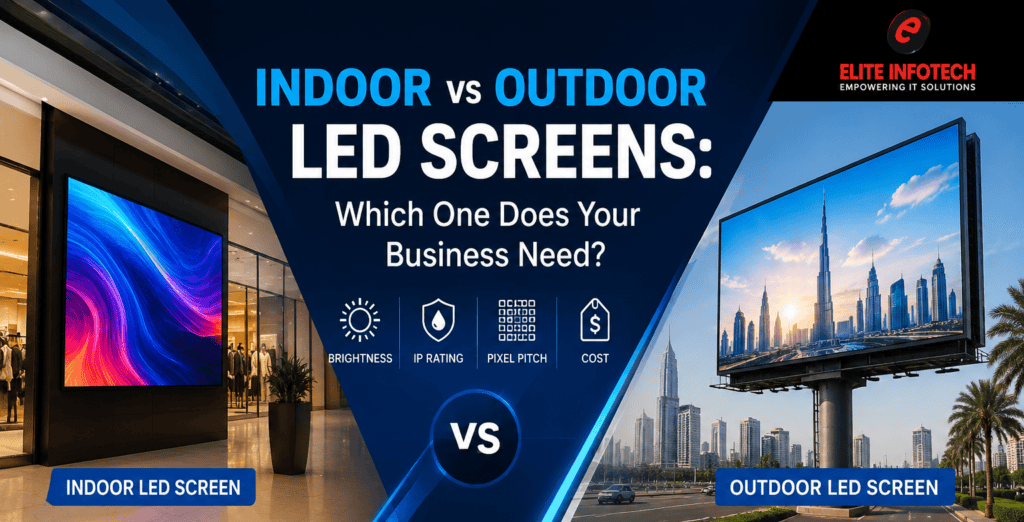
Picking the wrong LED screen is an expensive mistake. An indoor screen placed outside washes out in the sun and fails within months. An outdoor screen installed inside is uncomfortably bright, overspecified and far more costly than the job requires. When comparing indoor vs outdoor LED screen types, the split comes down to brightness, IP rating, pixel pitch and build quality. This guide covers all four, so you can make the right call before spending a single dirham.
What Is an Indoor LED Screen?
An indoor LED screen is built for controlled environments such as retail shops, hotel lobbies, offices, conference rooms and showrooms. With no direct sunlight to compete with, indoor screens run at 800 to 1,500 nits, which is plenty for a well-lit interior without being harsh on the eye.
Pixel pitch on indoor screens sits between P1.5 and P3, meaning the LEDs are packed tightly together and the image stays sharp for viewers standing one to two metres away. This is exactly the right spec for a retail display where a customer is reading product information or watching a promo up close.
Because indoor units skip weatherproofing and heavy thermal management, they cost less per square metre than outdoor screens and are lighter and easier to install. If the screen is going inside and the viewing distance is short, an indoor LED screen is the right call on both performance and budget.
What Is an Outdoor LED Screen?
An outdoor LED screen is a different product entirely. It needs 5,000 to 8,000+ nits to stay readable in direct UAE sun, a fully sealed weatherproof build rated IP65 or above, and a wider pixel pitch of P4 to P10 since viewers are standing much further away, on the street, across a car park or passing on a highway.
Heat dissipation systems, dust-resistant casings and structural frames built for years of outdoor exposure all come as standard. The screen body is sealed against shamal dust and rain, and the electronics are built to run through the temperature swings of a UAE summer without failure. That is why outdoor screens cost more per square metre than indoor units, even though the pixel density is actually lower.
Indoor vs Outdoor LED Display: The Difference
Brightness
- Indoor screens run at 800 to 1,500 nits, enough for any controlled interior
- Outdoor screens need 5,000 to 8,000+ nits to push through UAE sunlight
Pixel Pitch
- Indoor uses a finer pitch for close-up clarity since viewers stand nearby
- Outdoor uses a wider pitch since the audience is further away
IP Rating
- Indoor screens sit at IP30 to IP40 with no weatherproofing required
- Outdoor screens need IP65 or above to handle dust storms and rain
Cost
- Indoor screens cost less per square metre since they skip sealing and thermal systems
- Outdoor screens are priced higher because of the sealed build, thermal management and higher-output LEDs, not because the image is sharper
LED Screen IP Rating Explained
The LED screen IP rating is something many buyers overlook until it is too late. IP stands for Ingress Protection. The rating is written as two digits: the first covers dust protection on a scale of 0 to 6, with 6 being fully sealed, and the second covers water resistance on a scale of 0 to 9, with 5 meaning the unit handles jets of water from any direction.
For any outdoor LED screen in the UAE, IP65 is the absolute minimum. Anything below that risks dust ingress during shamal winds and water damage during seasonal downpours. Indoor screens skip this entirely, which is one of the main reasons they cost less to manufacture and install.
Outdoor LED Screen Brightness in UAE Conditions
Outdoor LED screen brightness is where most buyers misjudge. A screen that looks adequately bright in a showroom or on an overcast morning will wash out completely under Dubai midday sun. The human eye adjusts to ambient light, and in full UAE sunlight you need a screen that pushes through it, not just match it.
The minimum for any outdoor placement is 5,000 nits. For screens on west or south-facing walls that receive direct afternoon sun, budget for 7,000 to 8,000 nits. Screens with automatic brightness sensors are worth the additional cost because they dial output up during peak sun hours and bring it down at night, reducing power consumption and extending LED lifespan considerably.
Indoor LED Screen for Retail
An indoor LED screen for retail is one of the most demanding use cases, with its own specific requirements. Customers stand close to the screen, so pixel pitch matters more than raw brightness. A P1.5 to P2.5 pitch delivers a clean, detailed image at one to three metres without visible pixelation.
Colour accuracy is equally important. When a screen runs promotional content beside an actual product on the shelf, the colours on display need to match what the customer sees in their hands. A poorly calibrated screen undermines both the display and the product. Retail screens also run 10 to 12 hours daily, so build quality and thermal management matter even inside an air-conditioned space.
Get the Right LED Screen with Elite Infotech
The decision is straightforward once you know the space. Inside with close viewers, choose an indoor LED screen. Outside or in direct sun, choose an outdoor screen rated IP65 or above. For semi-outdoor spots such as a covered mall entrance, a petrol station canopy or a shaded building overhang, go outdoor-grade regardless of shade. A failed screen six months in costs far more than getting the spec right upfront.
Elite Infotech supplies and installs indoor and outdoor LED screens across Dubai and the UAE. Every project starts with a free site visit where we assess the space, recommend the right spec and give you a transparent quote before any commitment is made. Get in touch to book yours.
Frequently Asked Questions
What is the difference between an indoor and outdoor LED screen?
Indoor screens run at lower brightness with a tighter pixel pitch for close viewing, while outdoor screens are sealed against weather and built for much higher brightness to stay visible in daylight.
Can an indoor LED screen be used outside?
No. Indoor units lack the IP rating and brightness needed for outdoor conditions, and using one outside will damage it quickly and leave the display unreadable in sunlight.
What brightness level do I need for an outdoor LED screen in Dubai?
Aim for at least 5,000 nits, rising to 8,000 nits for screens facing direct afternoon sun, with automatic brightness adjustment to manage output through the day.
Which type of LED screen is best for a retail store?
An indoor screen with a pixel pitch of P1.5 to P2.5 and strong colour accuracy, since customers view it up close and the image needs to hold at short distances.
How much does an indoor vs outdoor LED screen cost?
Outdoor screens cost more per square metre due to weatherproof housing, higher-output LEDs and cooling components. Indoor screens are more affordable since they skip all of that.
Still deciding? Get a free site visit and quote from Elite Infotech, and we will recommend the right screen for your space before you spend a dirham.